How to Cleanse and Charge Runes: Activation Rituals for Bind Rune Magic
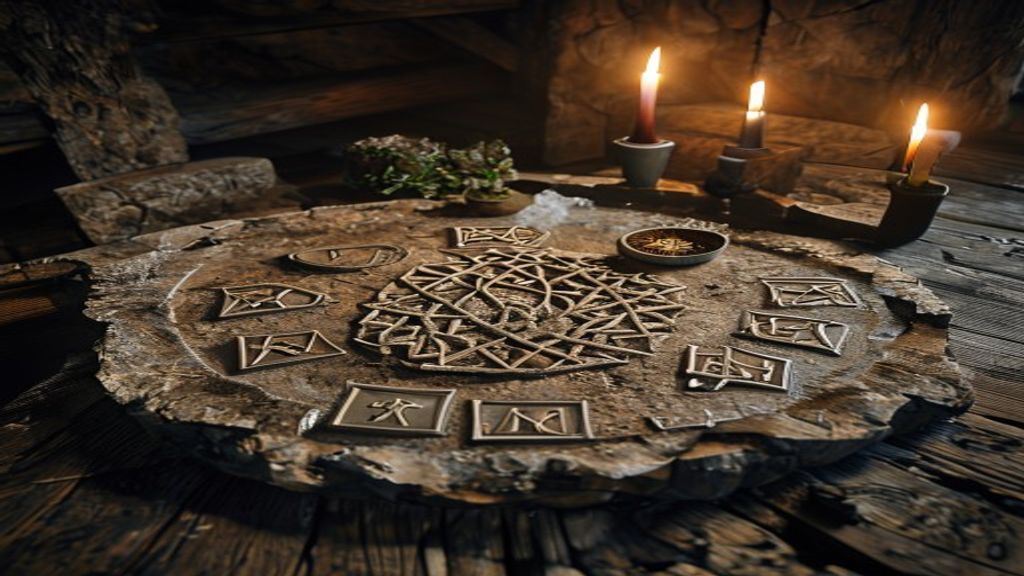
How to cleanse rune stones and charge them with focused intent is one of the most practically important questions in Elder Futhark practice — and one that popular guides frequently handle with insufficient grounding in the historical record. The Norse tradition did not treat runes as passive objects requiring occasional maintenance. The Sigrdrífumál is explicit: runes must be carved, coloured (reddened), named, and spoken over — a multi-stage process of activation that involves the practitioner's body, breath, voice, and will. Before a bind rune or set of individual runes can function as an intentional working tool, the ambient residue of their material origin and previous handling must be cleared, and a specific directional charge must be established. This article traces the historically grounded methods for both processes: the four-element consecration drawn from Germanic cosmology, the biological binding technique of "Making Red," the breath activation called Önd from the Eddic understanding of consciousness, the vibrational method of galdr, and the precise timing of these operations according to the lunar cycle and the sacred calendar of Odin's days. Whether you work with carved wooden runes, engraved stones, or designs created on the Bindrune Creator canvas, these methods apply to any physical or printed form bearing an intentional runic inscription.
Consecration by Four Elements: Salt, Water, Fire, and Smoke
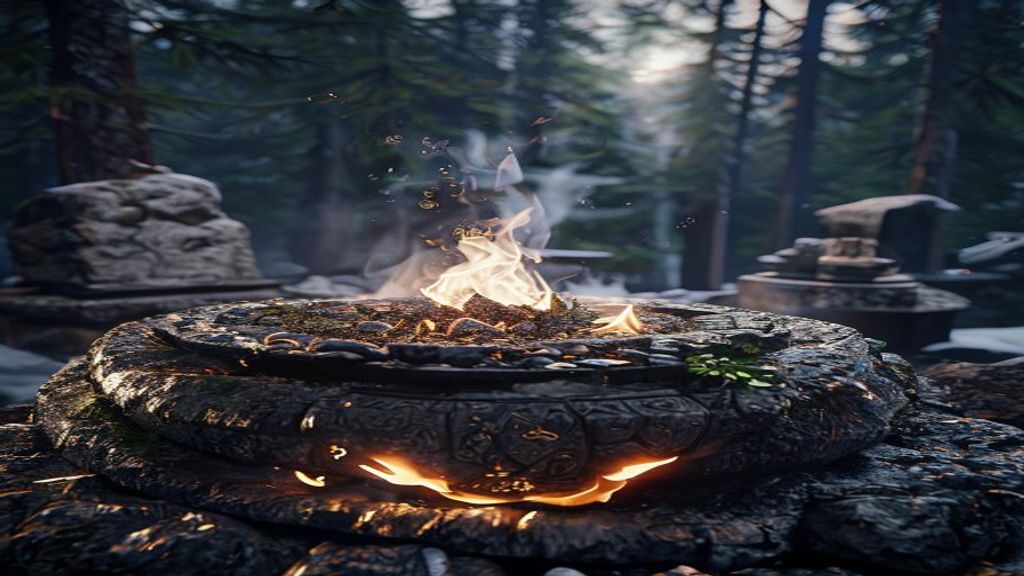
The four-element consecration is the foundational cleansing procedure and the appropriate first step for any newly carved, acquired, or long-unused set of runes. Its structure is not arbitrary: it mirrors the Old Norse cosmological schema in which existence is organized across a vertical axis connecting elemental realms. Earth (Jörð), water (the primordial ocean surrounding Midgard), fire (Muspellsheim's creative force), and air (the breath of the Æsir, which animates Askr and Embla in the Prose Edda's creation account) represent the four fundamental states of matter through which all things pass. To pass a rune through each element is to reset it to its pre-inscription state — a blank medium whose carved form remains but whose accumulated energetic content is cleared.
The procedure is performed as follows. Lay the runes on a clean cloth of natural fiber — undyed linen is traditional. This procedure applies equally to freshly carved wooden runes and to long-used stone sets. Have prepared: a small bowl of coarse salt, a vessel of clean cold water (spring water is preferable to tap water with its chemical treatment), a lit candle, and burning incense — juniper, pine, or mugwort are historically appropriate; these plants appear in Old Norse healing and ritual contexts, including the Nine Herbs Charm preserved in the Old English Lacnunga manuscript. Begin with earth. Press each rune briefly into the salt, or run the edge of the rune through a thin line of it, and state clearly: "By earth I clear this mark." Proceed to water: dip a finger in the water and trace the rune's carved form with the wet fingertip, naming the rune aloud. For fire: hold the rune near (not in) the candle flame, allowing the heat to reach the carved surface without scorching it, and speak its name again. Finally, pass it slowly through the smoke of the incense, drawing the smoke through the carved channels deliberately.
The key discipline in this sequence is attentiveness. Mechanical repetition — simply moving objects through four stations without focused awareness — produces nothing. The historical sources are consistent on this point: it is the practitioner's directed consciousness, combined with the spoken name, that distinguishes a ritual operation from a physical procedure. The Rúnatal section of the Hávamál (stanzas 138–145) describes Odin's acquisition of runic knowledge not as a passive discovery but as an act of intense, focused attention — he saw the runes, took them up, and fell back. The sequence implies that seeing and taking are acts of concentrated will, not accident.
The Power of Blood and Saliva: Biological Binding ("Making Red")
Of all the activation methods in the Norse runic tradition, none is more directly attested in the primary sources — and none more frequently misunderstood in modern popular accounts — than the practice of reddening the carved rune channels with blood or saliva. The Old Norse verb is fá, meaning to colour or paint, and it appears in the oldest runic poetry in direct connection with magical empowerment. The Sigrdrífumál, stanza 6, provides the clearest instruction:
"Sigurrúnar þú skalt kunna, ef þú vilt sigr hafa; ríst þær á hjaltit sverðs, sumar á véttrimum, sumar á valböstum, ok nefna tysvar Tý." — Sigrdrífumál, stanza 6 (Old Norse). Sigrdrífa instructs Sigurðr: carve victory runes on the hilt of the sword, on the edge-guards, on the blade-channels, and name Tyr twice.
The broader context of the Sigrdrífumál's instructions includes the practice of colouring the carved channels — the earliest manuscripts use forms of fá alongside rísta (to carve). The tradition of reddening is further attested in archaeological evidence: the Lindholmen amulet (4th–5th century CE), a bone plaque bearing Elder Futhark inscriptions, shows traces of red pigment in its carved channels. Iron Age and Migration Period artifacts show similar traces, suggesting that the practice of marking rune channels in red was widespread and not merely literary.
The significance of biological fluids — specifically blood (from a small prick on a finger) or saliva — lies in their conceptual function within the Norse understanding of the self. The hamingja (personal luck or spiritual force) was understood to be carried in the blood and breath of a person. By introducing blood or saliva into the channels of a carved rune or bind rune, the practitioner establishes a literal biological link between their own vital substance and the carved symbol. The rune becomes, in the tradition's vocabulary, bundinn — bound to a specific person. This is why such activation is called "Making Red" in modern practice: the reddening with biological fluid constitutes the final act of personal dedication. This principle extends naturally to permanent runic marks on the skin: those who carry bind rune tattoos find that the consecration of the mark is as important as its design, since the symbol and the bearer's body have already been joined without possibility of removal.
For those who prefer not to use blood, saliva is an equally attested biological medium — it carries the practitioner's DNA and can be applied without physical harm. The essential factor is not the specific fluid but the act of biological contact combined with conscious intention and spoken naming of the rune. Without the spoken element, the biological binding is incomplete.
Breath Activation: Önd and the Life-Force of Consciousness
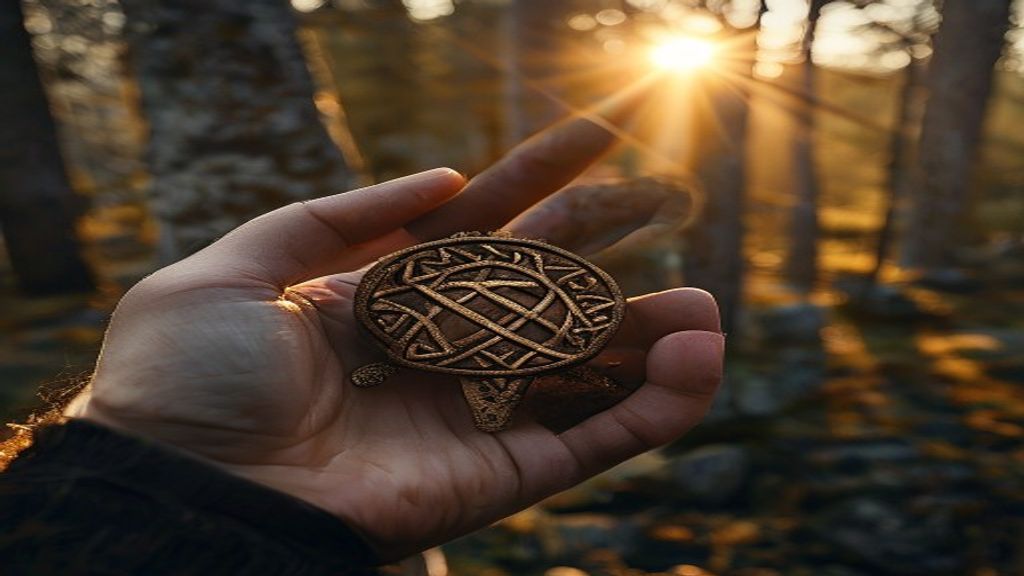
The Norse concept of Önd (pronounced approximately "und," rhyming with "mooned") is not simply "breath" in the physiological sense. It is the animating principle of consciousness — the divine breath that Odin breathed into the first humans, Askr and Embla, according to Snorri Sturluson's Prose Edda (Gylfaginning, chapter 9). The three gifts the gods gave to the newly created humans are listed as Önd (breath/consciousness), Óðr (inspired mental activity), and Lítu góða (good colour/vital appearance). Önd is the first and most fundamental: without it, there is no individual awareness.
To breathe Önd into a rune is therefore not a metaphorical act — it is a precise technical operation within the cosmological framework of the tradition. The procedure: hold the carved or printed rune at approximately arm's length, or place it flat before you. Focus your awareness on the carved form for a sustained period — thirty seconds to a minute — allowing the rune's geometry to fully occupy your attention. Then, draw a long, slow breath and direct it outward onto the rune's surface in a steady stream. As you exhale, speak (whisper or state clearly) the rune's name. For a bind rune, speak the names of all component runes in sequence: "Kenaz — Ansuz — Tiwaz." Repeat the cycle three times.
The number three is significant across the Norse tradition as the number of completion and the sacred triad — the three wells of Yggdrasil, the three gifts of the gods, the three Norns. Three breath cycles constitute the minimal complete activation. More sustained practice — extended sequences of naming and breathing — deepens the bond between practitioner and symbol. Edred Thorsson's Futhark: A Handbook of Rune Magic (1984) systematizes this practice in his description of "runestaves and talismans," noting that the preliminary visualization and breath work are not supplementary but essential to the working's efficacy.
Galdr: Vibrational Charging Through Runic Song
Galdr is the most distinctively Norse of the activation methods — and the one most powerfully supported by textual evidence. The word derives from Old Norse gala, "to sing, to crow," and appears throughout the Eddic corpus as the primary mechanism of runic magic. The Hávamál's celebrated Ljóðatal section (stanzas 147–165) lists eighteen specific galdr formulas Odin possesses, each described in terms of what the spoken/sung formula accomplishes. Stanza 157 describes a galdr that can "avert from the hanged man" — a formula for reversing curses. Stanza 161 describes one that works through the spoken naming of runes carved on weapons. In every case, the mechanism is vocal vibration combined with runic inscription.
The practice of galdr in a modern working context follows the same structural principle. Each rune has a traditional galdr formula constructed from extended repetitions and vowel-inflections of its name. Fehu becomes "Fehu — fehu — fehu — ffffffff — aaaaaa — uuuuuu." Ansuz becomes "Ansuz — ansuz — ansuz — aaaaaa — nnnnnnn — sssssss." The elongated vowels and consonants are intended to create a sustained resonance in the practitioner's vocal tract and chest cavity — the vibration is felt as much as heard. When applied to a carved or printed rune held at the practitioner's chest or solar plexus level, this resonance creates a physical connection between voice and symbol.
For a bind rune consisting of, say, Tiwaz (ᛏ) and Sowilo (ᛋ) — the classical victory combination — the galdr sequence would proceed through each component: first the Tiwaz formula (extended "t — iiiii — rrrrr"), then the Sowilo formula (extended "sssss — ooooo — wiiiii — loooo"), then both names spoken together in rhythmic combination. The tradition recommends performing galdr outdoors or in a space where the practitioner can genuinely project the voice without self-consciousness — the physical constraint of keeping silent, common in modern living situations, reduces the effectiveness of the method. Runes charged through galdr are especially well-prepared for use in readings — see the full guide on bind rune divination for how a deeply activated set changes the quality of interpretive work.
Activation Timing: Lunar Cycles and Sacred Days
The Norse tradition embedded its ritual operations within a precise temporal framework. Both the lunar cycle and the planetary week (inherited through the Roman calendar but adapted to Norse divine correspondences) offered optimal windows for different types of runic work. The following table synthesises the attested correspondences for activation timing:
| Day / Phase | Norse Correspondence | Optimal Runic Working | Runes Favoured |
|---|---|---|---|
| Wednesday (Óðinsdagr) | Odin / Woden | General activation, wisdom, divination | Ansuz ᚨ, Perthro ᛈ, Raidho ᚱ |
| Tuesday (Týsdagr) | Tyr | Victory, justice, warrior workings | Tiwaz ᛏ, Sowilo ᛋ, Algiz ᛉ |
| Thursday (Þórsdagr) | Thor | Protection, strength, weather workings | Thurisaz ᚦ, Uruz ᚢ, Hagalaz ᚺ |
| Friday (Frjádagr) | Freya / Frigg | Love, fertility, binding relationships | Gebo ᚷ, Berkano ᛒ, Ingwaz ᛜ |
| New Moon | Beginning, dark phase | Initiating new workings, setting intentions | Fehu ᚠ, Dagaz ᛞ, Wunjo ᚹ |
| Full Moon | Peak, completion | Amplifying existing workings, divination | Sowilo ᛋ, Laguz ᛚ, Kenaz ᚲ |
| Waning Moon | Release, decrease | Banishing, binding negative forces | Isa ᛁ, Nauthiz ᚾ, Hagalaz ᚺ |
Wednesday holds a privileged position in the tradition because it is the day directly associated with Odin, the divine source of runic knowledge. The Old English name "Wednesday" preserves the form "Woden's day" directly; the Norse Óðinsdagr was applied universally in the Scandinavian calendar. For any general rune activation — particularly the first consecration of a new set or bind rune — Wednesday is the first choice. The combination of Wednesday with the new moon (initiating a new working) or the full moon (amplifying an established practice) represents the optimal temporal windows the tradition recognised.
The hour within the day also carries significance in the later Icelandic grimoire tradition, which preserves planetary-hour calculations for timing magical operations. Midnight and the hour before dawn — the liminal periods between states — are consistently favoured in both the Eddic material and the later Galdrabók for operations requiring heightened concentration and the crossing of boundaries between states of being.
Design your bind rune before your activation ceremony. The Bindrune Creator canvas lets you compose Ansuz, Tiwaz, Sowilo, and any other Elder Futhark runes into a precise stave — then print or export it for your ritual work.
Create Your Bind Rune →Frequently Asked Questions
How do you cleanse rune stones for the first time?
The traditional four-element consecration is most thorough for a first cleansing. Pass the runes through salt (earth), sprinkle them with water, hold them near a candle flame (fire), and draw them through incense smoke — juniper or pine is historically appropriate. Speak each rune's name aloud as you complete the cycle. This removes ambient energetic residue accumulated during carving, storage, or handling by others before the rune reaches you.
What does it mean to charge runes?
Charging runes means infusing them with intentional, directed energy so that their symbolic potential is activated for a specific working. The word "charge" is a modern term for what the Norse tradition called ráðinn — interpreted and made ready. Charging combines breath activation (Önd), galdr vibration, and the practitioner's sustained focus on the rune's domain of influence. The result is a symbol whose carved form and whose symbolic potential are actively aligned with the practitioner's intent.
Is blood reddening of runes historically attested?
Yes. The practice of "reddening" (Old Norse: fá) runes is directly referenced in the Sigrdrífumál, where Sigrdrífa instructs Sigurðr to carve victory runes and colour them with blood. Archaeological finds including the Lindholmen amulet show traces of red pigment in carved rune channels. Saliva is an equally valid biological medium — it carries the practitioner's biological signature and can be applied without physical harm.
What is galdr and how does it activate runes?
Galdr (Old Norse: galdrar) is the practice of singing or chanting runic names and formulas. The Hávamál explicitly states that Odin used singing as the mechanism of runic magic. Each rune has a traditional galdr formula built from extended repetitions of its name — Fehu becomes "fehu fehu fehu ffffffff aaaaaa uuuuuu." Vibrational activation through galdr creates resonance between the practitioner's voice and the rune's symbolic form, seating the activation in the physical body and the carved form simultaneously.
What is the best day of the week to activate runes?
Wednesday — Óðinsdagr, Odin's day — is the traditional first choice for rune activation and dedication ceremonies. Wednesday preserves the form "Woden's day" in English, directly associating the day with the Norse god of runic wisdom. Secondary choices include Tuesday (Tyr's day, for warrior runes like Tiwaz) and Thursday (Thor's day, for protective workings with Thurisaz or Algiz).
How often should rune stones be cleansed?
There is no fixed prescription in the historical sources. Most serious practitioners perform a full elemental cleansing after each major working, after contact with a heavily charged emotional environment, or at significant seasonal markers — the solstices, equinoxes, and the Norse blót festivals. Personal runes kept securely and used only by their owner require less frequent cleansing than shared or newly acquired sets.
Can you activate a digital bind rune the same way as a carved one?
The activation methods — Önd (breath), galdr (singing), and focused intention — are not material-dependent. They work on a printed image, an engraved stone, or a design displayed on screen with equal validity. What matters is the practitioner's engaged presence: tracing the rune's form deliberately, speaking its component names, and breathing conscious intention into it. Many practitioners design their bind runes using the Bindrune Creator canvas, print the result, and then perform a full activation ceremony on the physical print.