Love Bind Rune: Runic Magic for Attraction and Partnership
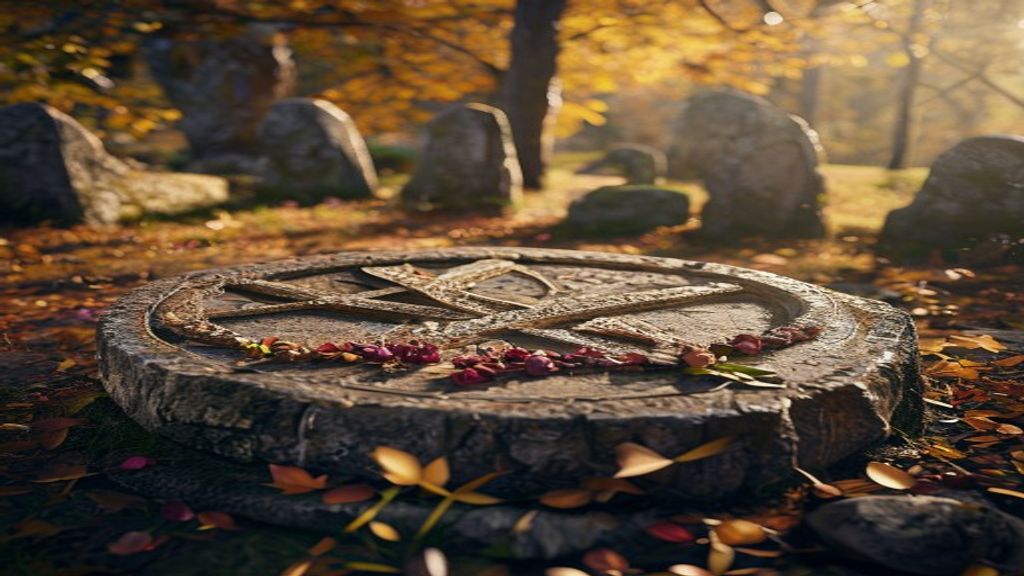
The love bind rune is one of the most requested — and most misunderstood — applications of Elder Futhark runic art. Unlike the coercive binding magic condemned in the Norse sagas, an authentically composed love bind rune works not by compelling another person, but by transforming the practitioner: opening them to genuine partnership, cultivating the inner conditions that attract reciprocal connection, and aligning their will with the cosmic principle of equal exchange. The Norse conception of love was not romantic fantasy but a serious, ethically freighted covenant — a gift freely given and freely received. The Hávamál, the great eddic poem of Odin's wisdom, devotes substantial stanzas to the dynamics of gifts, reciprocity, and the folly of love pursued without wisdom. This guide explores the four Elder Futhark runes most directly associated with love and partnership — Gebo (ᚷ), Laguz (ᛚ), Berkano (ᛒ), and Ingwaz (ᛜ) — their historical attestation in runic poems and archaeological finds, the ethical framework the tradition demands of any practitioner working in this domain, and a structured method for composing a personal stave for true-partner attraction. The work begins, as it always must, with self-knowledge rather than desire.
Gebo (ᚷ): The Philosophy of Equal Exchange and Sacred Partnership
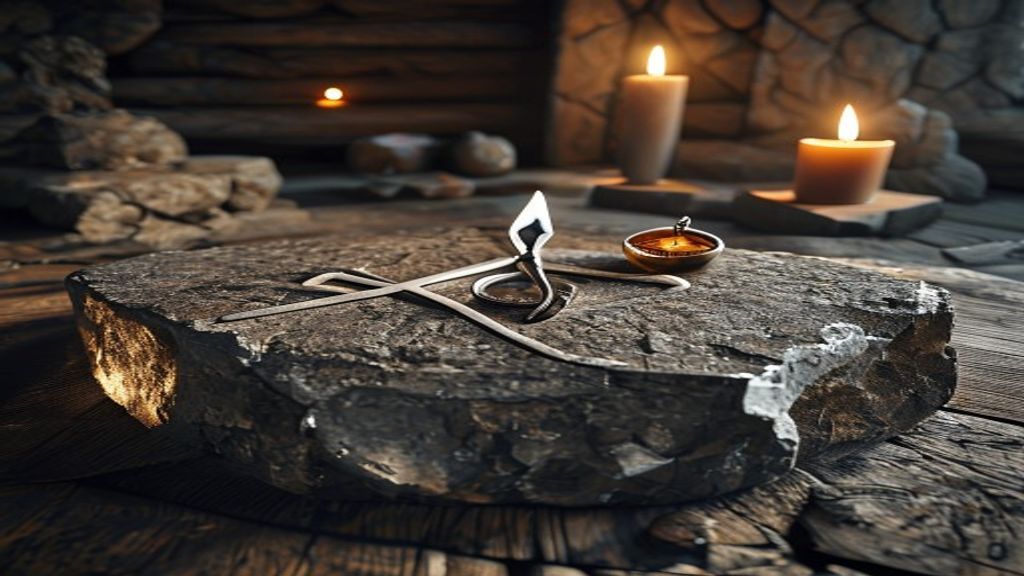
Gebo (ᚷ) is the seventh rune of the Elder Futhark and the primary runic symbol of love in the Norse tradition — not because it signifies romantic sentiment, but because it encodes the philosophical structure of what genuine partnership requires. Its Proto-Germanic name, *gebō, means "gift," but in the ancient Germanic world, a gift was never a simple transaction. It was a social, spiritual, and cosmic event. The Old Norse legal concept of gáfur and the related principle recorded throughout the Hávamál — "a gift looks to a gift" (gefendr ok þiggendr) — established that the giving of a gift created an indelible bond between giver and receiver, a bond that could never be fully discharged through return but only perpetuated through ongoing reciprocal exchange.
This is why Gebo is not, at its core, about romance — it is about the recognition of another person as an autonomous agent whose gifts deserve honour. Love, in the Norse framework, is not what you feel; it is what you do. The Gebo rune's X-form is visually and conceptually precise: two lines of equal length crossing at a single point, neither subordinate to the other, both contributing equally to the form's stability. Remove either line and the symbol collapses. This geometric truth is the rune's deepest teaching about partnership: it can only exist when both parties contribute their authentic selves in full.
In the archaeological record, Gebo appears as a single-rune inscription on objects of personal significance — rings, brooches, amulets — from Migration Period and Viking Age contexts across Scandinavia, the British Isles, and continental Germanic territory. A single Gebo carved on a ring was not decoration: it was a declaration of the exchange-bond the ring represented, whether that was a wedding, a sworn friendship (vinr), or a covenant of mutual obligation. The rune in these contexts was not wished upon another; it marked what the giving itself had already created. This archaeological evidence reinforces what the literary sources confirm: Gebo belongs to the domain of genuine, mutual, freely chosen connection.
In love magic specifically, working with Gebo begins by asking not "how do I attract someone?" but "what do I genuinely have to offer? What is my authentic gift to a partnership?" This is not a merely rhetorical question. The Gebo working, properly understood, initiates a process of self-assessment — identifying and cultivating one's own character, values, and capacity for sustained reciprocal exchange — that inevitably precedes, and creates the conditions for, genuine partnership.
Laguz (ᛚ): Emotional Flow and the Intuitive Language of the Heart
Laguz (ᛚ) is the twenty-first rune of the Elder Futhark, its name derived from Proto-Germanic *laguz, meaning water, lake, or flowing body of water. Where Gebo encodes the structural principle of partnership, Laguz governs its experiential dimension — the feeling, flowing, intuitive quality of emotional life that must be engaged for love to be more than a contractual arrangement. The three rune poems that attest Laguz preserve a consistent picture: the Anglo-Saxon Rune Poem describes the sea as "seemingly endless to men" — a domain of bounty but also of risk, navigable only by those who trust their instruments; the Old Icelandic and Old Norwegian Rune Poems both name the rune's referent as water in motion, as a cascade or cataract.
This motif of flowing water as the medium of emotional truth is not incidental. Water in Norse cosmology is associated with the Vanir — the gods of fertility, intuition, and natural forces — as opposed to the Aesir's domain of order, structure, and law. Freyr and Freya, the primary Vanir deities, govern the domains most directly relevant to love and attraction, and Laguz connects to their watery, fluid, felt-sense intelligence rather than to the rational structures of Odin's world. In a love bind rune, Laguz contributes what Gebo alone cannot provide: the capacity to feel and respond to another person, to be moved, to let emotion flow without damming it into rigid expectation.
"The rune lagu stands for water in all its forms — the lake, the sea, the well that feeds the roots of Yggdrasil. It is the element that flows into every available space, that takes the shape of what contains it, and whose nature is to move. In love, this is the capacity to be genuinely touched." — Edred Thorsson (Stephen Flowers, Ph.D.), Runelore: A Handbook of Esoteric Runology (1987)
Laguz in practical application within a love bind rune serves two related functions. First, it opens emotional receptivity — the ability to recognise and respond to genuine connection rather than projecting idealisations onto insufficient candidates. Second, it governs intuitive intelligence: the capacity to read emotional truth in situations where rational analysis alone falls short. Love often announces itself through precisely the kind of felt-sense knowing that Laguz represents — a sudden recognition, an unexpected resonance — and a Laguz-containing stave enhances the practitioner's access to this mode of perception. Combined with Gebo, it creates a stave for partnership that is simultaneously structurally sound (the X-form of mutual exchange) and emotionally alive (the flowing current of felt connection).
Berkano and Ingwaz: Runes of Fertility and the Creation of Family
While Gebo and Laguz address the early arc of love — attraction, recognition, and the formation of reciprocal bonds — Berkano (ᛒ) and Ingwaz (ᛜ) speak to its deepening into committed partnership, shared life, and the possibility of family. These two runes, both from the Third Aett of the Elder Futhark governed by Tyr's principle of cosmic order, encode the generative forces that sustain love beyond its initial flowering.
Berkano's name comes from Proto-Germanic *berkanan, the birch tree — the first tree to send out leaves in spring, the tree of renewal after winter. Its association with the goddess Frigg (attested in the West Germanic tradition and later Eddic sources) grounds it in the domain of the Great Mother: protective nurturing, cyclical renewal, and the sheltering care that a committed partnership extends to its members and, ultimately, to children. The B-form of Berkano's shape — two rounded lobes on a vertical stave — has been interpreted by runologists including Thorsson as a stylised pregnant abdomen, encoding the rune's association with gestation and birth directly into its visual architecture. Where Gebo establishes the bond and Laguz ensures its emotional depth, Berkano provides the protective container within which a shared life can grow.
Ingwaz (ᛜ) completes this picture. Named for Ingwaz — the Proto-Germanic ancestor-name of the god Freyr, lord of fertility, sunlight, and abundance — this rune governs what might be called sacred masculine generative force: not dominance, but the concentrated, directed energy that brings potential into manifestation. The Eddic traditions describe Freyr as the most beloved of the gods among humans, the one whose blessing was sought at weddings, at the birth of children, and at harvest festivals, because he embodied the joyful principle of life perpetuating itself. Ingwaz in a love bind rune signals not just attraction but commitment — the decision to invest one's generative force in a specific partnership and to bring its potential fully into the world.
| Rune | Glyph | Elder Futhark Position | Love Domain | Primary Function in Bind Rune |
|---|---|---|---|---|
| Gebo | ᚷ | 7 (First Aett) | Mutual exchange, equal partnership | Establishes the structural bond of reciprocal love |
| Laguz | ᛚ | 21 (Third Aett) | Emotional flow, intuitive connection | Opens receptivity and felt-sense love intelligence |
| Berkano | ᛒ | 18 (Third Aett) | Nurturing, fertility, protective care | Provides the container for sustained partnership growth |
| Ingwaz | ᛜ | 22 (Third Aett) | Generative force, commitment, Freyr's blessing | Brings partnership potential fully into manifestation |
| Wunjo | ᚹ | 8 (First Aett) | Joy, harmony, shared happiness | Optional addition for staves focused on relational joy |
Ethics of Love Magic: Why Runes Must Never Override Another's Will
The Norse runic tradition, in both its historical documentation and its rigorous modern revival, draws an unambiguous ethical boundary around love magic. This boundary is not a modern imposition of contemporary values onto an ancient tradition — it is embedded in the tradition's own structure and explicitly addressed in its primary texts. The Hávamál devotes an entire sequence of stanzas (verses 84–102 in standard editions) to the folly and danger of love pursued without wisdom, without the other person's genuine participation, and without honest self-knowledge. Odin himself describes how love pursued compulsively leads to distress, humiliation, and moral compromise — not as punishment but as the inevitable consequence of attempting to force an outcome that requires authentic mutuality to succeed.
The broader magical tradition encoded in the Eddas further confirms this principle. The category of magic known as seiðr — particularly the coercive or manipulative applications of it attributed to figures like the witch Heiðr and, in darker myths, to certain applications of Vanir magic — was associated in the literary sources with deep moral ambiguity and often social disgrace, precisely because it involved overriding another person's will. The word for love magic that compels, rather than attracts, was understood as a violation of the Norse concept of personal sovereignty — the inviolability of each person's wyrd, their own thread in the web of fate.
This distinction is practically crucial for any practitioner working with love bind runes. An ethically composed love stave operates entirely within the practitioner's own sphere: it cultivates their qualities, opens their receptivity, removes their internal obstacles to connection, and aligns their will with the conditions in which genuine love can arise. It cannot and should not target a specific person, attempt to create attraction where none exists, or seek to override another person's clearly expressed indifference or refusal. The Norse tradition is unambiguous: love that is not freely given is not love — it is a form of capture that diminishes both parties.
Runologists who have written most rigorously on this point — including Edred Thorsson in his treatment of love rune workings — emphasise that the most effective love bind rune is, paradoxically, one that is entirely focused on the self: on becoming the person with whom authentic love becomes possible. This is not a soft limitation. It is a recognition that the runic tradition, at its deepest level, is a technology for self-transformation rather than world-manipulation — and that love, being a mutual and autonomous phenomenon, cannot be manufactured through external force.
Practice: Building the "True Partner Attraction" Stave with Herbs
The "True Partner Attraction" stave combines Gebo (ᚷ) and Laguz (ᛚ) as its core — the two runes most directly associated with authentic love and emotional openness — optionally adding Berkano (ᛒ) if the practitioner's intention includes the development of committed, family-oriented partnership. The stave is built on a shared vertical stave, with Gebo's X-form crossed at the mid-point and Laguz's diagonal arm extending from the top of the same stave. Practiced runic artists will note that this configuration naturally generates a partial Wunjo (ᚹ) form at the upper right — a "hidden rune" whose meaning (joy, harmony, communal happiness) is entirely aligned with the working's intention, and which should be consciously acknowledged and integrated rather than viewed as accidental.
- Prepare the material. Choose a natural material that has personal resonance: a small piece of birch wood (Berkano's sacred tree), apple wood (associated with Freya, the Vanir goddess of love), or aged parchment. Cut or shape it to a size comfortable to carry — no larger than a palm. The material's naturalness matters: stone, wood, bone, or linen are all historically attested amulet substrates.
- Set the herbs. Before carving, place the material on a surface surrounded by rose petals, dried vervain, and elder flower — plants whose sympathetic correspondences with love and partnership are attested in the Germanic-Nordic herbal tradition. Light a single candle of rose or white colour. The herbs serve as a sympathetic context, establishing the working's domain before the rune is inscribed.
- Carve or draw the bind rune. With a dedicated tool — a knife, stylus, or pen kept only for runic work — inscribe the Gebo–Laguz bind rune on the prepared surface. Work deliberately, naming each rune aloud as you inscribe its strokes: "Gebo" for each arm of the X, "Laguz" for the vertical stave and diagonal arm. The inscription itself is the first act of intentional binding.
- Colour the rune. The historical tradition of rauðr rúnar — "making the runes red" — involved colouring inscribed runes with a substance of biological significance. Modern practice may substitute red ochre pigment, diluted red ink, or a small amount of the practitioner's own blood applied with intention. Colouring reinforces the binding of the working to the practitioner's own life-force.
- Speak the galdr. Hold the finished stave in both hands, close your eyes, and speak the names of the runes in sequence — Gebo, Laguz (and Berkano if included) — three times each, letting the sound resonate in your chest. Then breathe Önd — a slow, deliberate outbreath — onto the surface of the stave while holding the specific intention: not a specific person, but the quality of connection you seek.
- Carry or place the stave. The completed amulet can be carried on the body, placed under a pillow, or positioned at the threshold of the home. The Hávamál's tradition of runes on door-frames as attractors of beneficial energy supports threshold placement for love workings.
After working, the herbs should be gathered and returned to the earth — buried at the base of a tree or scattered in a body of running water — releasing the sympathetic context into the natural cycle. The stave itself should be reviewed at each new moon: speak the galdr again, reinforce the intention, and note whether the working's conditions — the practitioner's own readiness for genuine partnership — have evolved. Love workings in the Norse tradition are living processes, not static spells.
Ready to design your own love bind rune? Our interactive canvas lets you combine Gebo, Laguz, Berkano, and any other Elder Futhark runes on a shared stave — visualising the symbolic relationships before you inscribe them in any permanent medium.
Design Your Love Bind Rune →Frequently Asked Questions
What is the best rune for attracting love?
Gebo (ᚷ) is the foremost rune of love and partnership in the Elder Futhark. Its X-form represents equal exchange between two individuals — the foundational principle of Norse partnership ethics. For attraction specifically, Laguz (ᛚ) amplifies emotional openness and intuitive resonance. A bind rune combining Gebo and Laguz creates a powerful working for drawing genuine partnership into one's life, operating on the practitioner's own receptivity rather than targeting another person.
What does a love bind rune actually do?
A love bind rune concentrates the symbolic energies of multiple Elder Futhark runes into a single working focused on relationships. Unlike a spell targeting a specific person, an ethically composed love bind rune works by opening the practitioner to authentic connection, removing inner obstacles to partnership, and aligning them with the conditions in which love can genuinely develop. It operates on the practitioner's own field, not on another person's free will — which is both the ethical requirement and, the tradition argues, the more practically effective approach.
Is it ethical to use rune magic for love?
The Norse tradition, as preserved in the Hávamál and the broader Eddic corpus, draws a firm ethical line between working on oneself and coercing others. Rune magic directed at opening the self to love, cultivating qualities that attract partnership, and removing internal barriers is considered legitimate practice. Magic designed to compel or override a specific person's will violates the principle of personal sovereignty and is cautioned against across both historical and modern runic traditions. The Hávamál's extensive wisdom on love consistently emphasises self-knowledge and authenticity over manipulation.
Which runes are associated with fertility and family?
Berkano (ᛒ) and Ingwaz (ᛜ) are the primary fertility and family runes of the Elder Futhark. Berkano — from Proto-Germanic *berkanan, the birch tree — embodies maternal protection, birth, and nurturing growth, and is associated in the West Germanic tradition with the goddess Frigg. Ingwaz, named for the god Freyr (Ingwaz), represents the generative force that brings potential into manifestation. Their combination in a bind rune is traditionally associated with partnership that deepens into committed, family-centred life.
Can I use a love bind rune as a tattoo?
Permanent runic marks require careful consideration. The Elder Futhark tradition regards a rune inscribed on the body as a perpetual working — it cannot be easily deactivated or revised. A love bind rune tattoo should only be chosen after sustained work with the symbol in other forms, thorough understanding of each component rune's full range of meaning, and clear intention about whether the symbol encodes a universal opening to love or a specific relational context that may change over time. Designs focused on attracting love generally (rather than tied to a specific person or relationship) age better as permanent marks.
How do I activate a love bind rune stave?
Activation follows the classical galdr sequence attested in the Sigrdrífumál and broader runic tradition: trace the bind rune with your dominant hand while naming each component rune aloud in sequence — Gebo, Laguz, and any additional runes — using their traditional Old Norse pronunciations. Then breathe Önd (intentional life-breath) onto the symbol while holding the specific intention clearly in mind. Keep the stave close to the body and revisit the galdr regularly — at new moons or whenever the working's intention needs reinforcing — as love workings in the Norse tradition are understood as living processes that require ongoing engagement.
What herbs complement a love bind rune stave?
The Norse herbal tradition pairs specific plants with runic workings through sympathetic correspondence. Rose (associated with Gebo's gift of the heart), vervain (a classical Germanic love herb with extensive magical attestation), and elder flower (connected to Berkano's birch-goddess nurturing energy) are appropriate complements. The herbs are best placed around the stave during activation, creating a sympathetic field that supports the working's intention. After the activation ritual, they should be returned to the earth — buried or scattered in running water — releasing the working's context into the natural cycle.