Bind Rune for Good Luck: Tiwaz ᛏ and Sowilo ᛋ for Victory and Success
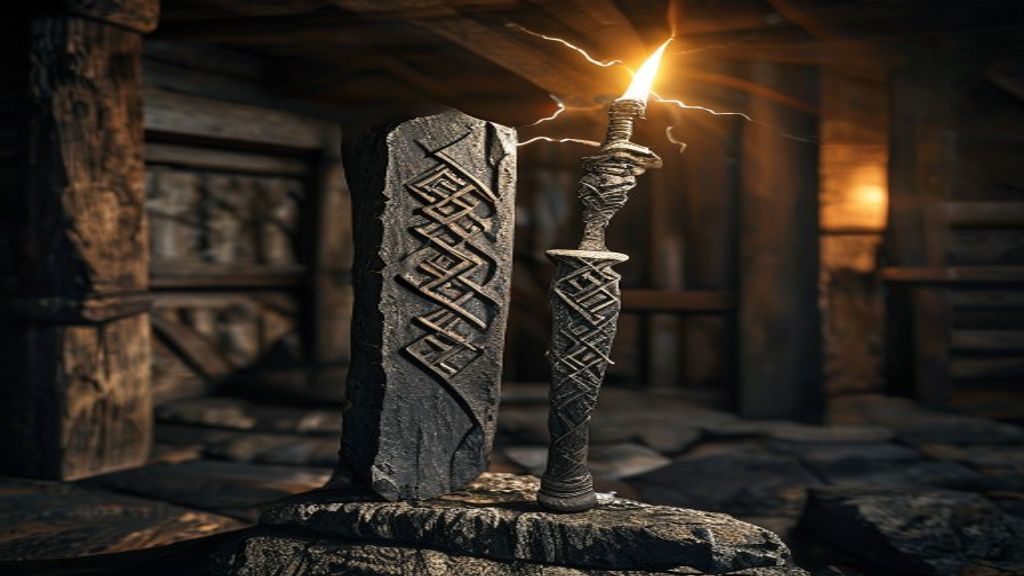
A bind rune for good luck is not a passive charm. In the Norse understanding of fate, luck — hamingja — was an active force, a quality of soul built through disciplined action, righteous intent, and alignment with the great cosmic order. The most powerful Norse rune for success was never conceived as a windfall delivered by chance; it was engineered. Two runes stand at the centre of this engineering: Tiwaz (ᛏ), the arrow-spear of Tyr, god of justice and the disciplined will, and Sowilo (ᛋ), the lightning-bolt of the sun in its full triumphant power. Combined into a single stave, they form what Viking Age warriors called a sigrún — a victory rune — and what Icelandic tradition later refined into the specialised category of luck staves. This article examines the archaeology, the eddic poetry, the Icelandic manuscript tradition, and the practical symbolic logic of the Tiwaz-Sowilo bind rune: how these two runes interact, why their combination represents something that neither achieves alone, and how you can design a personalised victory talisman anchored to your own name and purpose. Twenty articles into this series, we arrive at where every bind rune journey ultimately leads — the threshold of your own creation.
Sig-Runes: Tiwaz and Sowilo in the Eddic Victory Tradition
The primary textual source for the use of specific runes in battle magic is the Sigrdrífumál — the "Sayings of Sigrdrífa" — a didactic eddic poem preserved in the Codex Regius (c. 1270 CE) and the Volsunga Saga. Its place within the broader history of Viking bind runes is central: the poem's stanza 6 is one of the oldest and most explicit operational instructions for runic weapon-inscription that survives. In the poem, the valkyrie Sigrdrífa, awakened by the hero Sigurd after years of enchanted sleep, offers him a formal instruction in runic knowledge. She categorises runes by function and domain, naming sigrúnar — victory runes — as the first and most important category of applied runic working.
"Sigrúnar þú skalt kunna, ef þú vilt sigr hafa; ríst þær á hjalti hjörvar, sumar á véttrimum, sumar á valbǫstum, ok nefn tý tvisvar." — Sigrdrífumál, stanza 6; trans.: "Victory runes you shall know, if you will have victory; carve them on the sword's hilt, some on the blade's guard, some on the plates, and name Tyr twice."
The instruction to "name Tyr twice" — nefn tý tvisvar — is a direct invocation of the Tiwaz rune, whose name encodes the god Tyr. The repetition is significant: in runic composition, doubling a rune amplifies its force and anchors the working specifically to its divine archetype. The spear-form of Tiwaz was physically carved into sword hilts, a practice archaeologically confirmed by finds such as the Wraxall Sword (Somerset, England, early Migration Period) and the Holborough sword (Kent, c. 6th century CE), both of which bear runic inscriptions on their blade or hilt assemblies.
Sowilo's role in the victory tradition is equally well-attested. The Proto-Germanic name *sōwilō means "sun" — and the Norse understanding of the sun was not merely astronomical. Sól, the sun, was a living divine force, a chariot driven across the sky in perpetual flight from the wolves Sköll and Hati who pursued her. The Sowilo rune captures this quality of the sun in full momentum: clarifying, warming, unstoppable. On the Lindholmen amulet (c. 500–600 CE, Sweden), one of the most studied Migration Age magical objects, a series of runes including multiple Sowilo forms appear in a sequence that runologists interpret as a condensed protective and victory formula. The rune's lightning-bolt shape — a single diagonal line, or two diagonal lines forming a zigzag — evokes both solar brilliance and the swift, decisive strike of a weapon aimed true.
Together, Tiwaz and Sowilo describe the complete architecture of victory in the Norse cosmological view: Tiwaz provides the vertical axis — disciplined will, righteous intent, the courage to act under constraint and sacrifice — while Sowilo provides the kinetic force, the momentum of solar light that clears darkness and drives triumph home. Neither rune alone captures the full dynamic of winning. Tiwaz without Sowilo is justice without power — principle without momentum. Sowilo without Tiwaz is raw energy without direction — brilliance that scatters rather than strikes. Where victory requires raw physical endurance alongside directed will, practitioners often extend the stave with Uruz (ᚢ) — the full treatment of that dimension is covered in the guide to the bind rune for strength. Together, in the victory bind rune, they compose a complete working: purposeful force directed by disciplined will toward a clearly defined goal.
Personal Success Talisman: Binding Your Name with Victory Runes
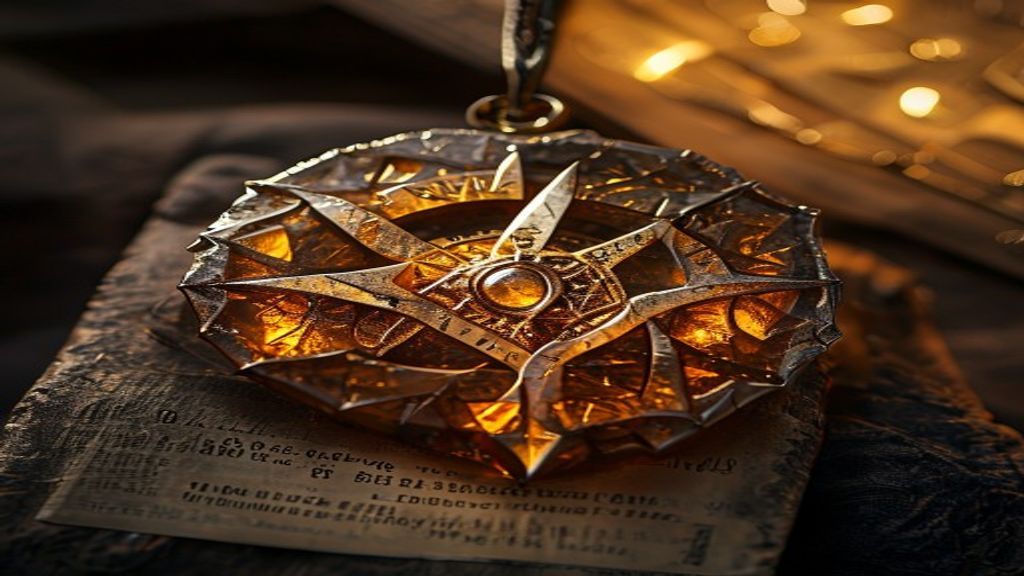
One of the most sophisticated techniques in the Elder Futhark bind rune tradition is name-binding: the integration of the initial rune-letters of a personal name into a victory stave, creating a sigil that is simultaneously a general working (victory, luck, success) and a specific personal dedication. This practice has clear archaeological precedents. Several Migration Age bracteates — small gold or silver pendants stamped with runic inscriptions — incorporate abbreviated name-runes alongside their protective and luck formulas, anchoring the amulet's power to a specific individual.
The procedure for creating a personal success talisman follows a documented logic. First, identify the initial sounds of your personal name and their corresponding Elder Futhark runes. The correspondence is phonetic, not alphabetic — you are working with sound values, not letter names. A name beginning with a voiced "A" sound maps to Ansuz (ᚨ); an "S" beginning to Sowilo (ᛋ); a "T" beginning to Tiwaz (ᛏ) itself, creating the pleasing case where your name-rune and your victory rune are one and the same. The rune-to-sound correspondences are well-established by comparative runological scholarship and documented across this series.
Second, determine the geometric integration. The Tiwaz-Sowilo pairing offers an elegant compositional base: Tiwaz's vertical stave and upward-angled arms creates a natural axis onto which Sowilo can be reflected or superimposed. Your name-rune enters the composition as a geometric element, sharing the central stave and allowing its own diagonal or branching arms to emerge as natural extensions of the existing structure. The test of a well-composed name-bind is that every line in the final design performs double duty — it belongs simultaneously to the victory stave and to the name element, with no extraneous strokes and no unintended hidden runes that contradict the working's purpose.
Third, the material and method of creation matter to the tradition. The Sigrdrífumál specifies carving on the hilt components of weapons — grip, guard, pommel-plate — as the preferred medium for victory runes, because the object that delivers the blow carries the working directly to its purpose. For personal talismans carried on the body rather than wielded, the tradition recommends carving into natural materials with a personal connection: wood from a tree on family land, bone from hunted game, stone gathered at a meaningful site. The carved talisman is then named — spoken aloud in galdr, the chanting of rune-names — to activate the symbolic structure and formally dedicate it to its bearer.
For those working in the modern context, the digital design canvas is a legitimate first step in this process: composing, refining, and exporting the bind rune before committing it to a physical medium. The Bindrune Creator canvas allows you to overlay runes on a shared stave, rotate and scale individual elements, and preview the emergent hidden runes before your design is finalised — exactly the kind of intentional compositional work the tradition requires.
Five Victory and Luck Runes: A Comparative Reference
The Tiwaz-Sowilo pairing is the most historically documented combination for victory and luck, but it is not the only runic resource in this domain. The Elder Futhark contains a cluster of runes whose domains intersect with success, fortune, and triumph — each operating on a distinct aspect of what "winning" means. Understanding the differences between these runes allows a practitioner to select the right combination for their specific situation rather than applying a generic formula.
| Rune | Glyph | Position | Domain in Victory / Luck | Best Combined With |
|---|---|---|---|---|
| Tiwaz | ᛏ | 17 | Disciplined will, righteous sacrifice, justice in conflict; the directed power that wins through integrity | Sowilo (for battle victory), Uruz (for physical triumph), Raido (for sustained campaign effort) |
| Sowilo | ᛋ | 16 | Solar momentum, clarity of purpose, the unstoppable force of light overcoming darkness; swift decisive victory | Tiwaz (for directed triumph), Wunjo (for joyful success), Algiz (for protected achievement — see the protection bind rune guide for warding combinations that complement a victory stave) |
| Wunjo | ᚹ | 8 | Joy, harmony, the felt experience of luck as a life-condition rather than a single outcome; communal good fortune | Sowilo (for victorious happiness), Fehu (for fortunate prosperity), Jera (for harvest satisfaction) |
| Fehu | ᚠ | 1 | Mobile wealth, the primal energy of abundance in circulation; luck as material fortunateness and financial momentum | Jera (for patient wealth growth), Wunjo (for joyful prosperity), Othala (for inherited wealth anchored to lineage) |
| Jera | ᛃ | 12 | Harvest, the year-cycle, earned success through sustained effort over time; luck as the return of what was rightly planted | Fehu (for abundant harvest), Sowilo (for bright outcomes), Berkano (for organic growth to fruition) |
This table reveals a crucial distinction that is often collapsed in casual discussions of "luck runes." Fehu governs fortune as material abundance in movement — the flow of cattle, wealth, resources. Jera governs fortune as the earned return of patient labour — the harvest that rewards a year of preparation. Wunjo governs fortune as the experiential quality of a life well-aligned — the bliss of belonging and harmony. Sowilo and Tiwaz together govern fortune in its most dynamic and contested form: the victory achieved in active struggle against resistance and difficulty, where the outcome is not given but won. Each rune addresses a different question. The practitioner's skill lies in identifying which question their working actually needs to answer.
Psychology of the Winner: Belief, Confidence, and the Runic Stave
The Norse tradition did not separate what we would call the psychological from the magical. The concept of megin — inner might or personal power — was understood as a real force that a warrior could cultivate or deplete, that could be strengthened through right action and weakened through dishonour, fear, or the violation of personal integrity. The bind rune for victory and luck functioned, in this framework, as both a magical working and a structured psychological practice: a way of concentrating megin, clarifying intent, and anchoring a state of readiness in a visible, tangible form.
This understanding aligns with documented psychological research in ways that are worth examining with scholarly seriousness. The work of Wicklund and Gollwitzer on symbolic self-completion (1982) established that when individuals commit symbolically to an identity-relevant goal — by creating, wearing, or publicly declaring a symbol of that commitment — they demonstrate significantly increased persistence in pursuing the goal, particularly under adversity. The mechanism is not mystical: the physical symbol serves as an externalized anchor for an internal state, reducing the cognitive load of sustained motivation and providing a recovery point when doubt or difficulty arise.
The bind rune tradition formalises this psychological process in ways that modern goal-setting theory has only partially reinvented. The requirement to identify specific runes for a specific working forces the practitioner to articulate their intention with precision — what kind of success, against what specific resistance, on what timescale. The geometric composition requires sustained attention to the relationship between symbolic elements, embedding the goal in a complex structure that the mind returns to. The galdr — the spoken activation of the rune names — transforms the private intention into a voiced commitment, engaging the additional psychological weight of public declaration. And the physical medium — carved, worn, or kept in a significant place — serves as a continuous environmental cue, what behavioural science calls an implementation intention anchor.
What the Norse tradition adds, beyond modern goal-setting psychology, is the cosmological frame: the idea that personal success is not an isolated individual achievement but a participation in the broader order of the worlds. Tyr's sacrifice — his hand offered to the wolf Fenrir to honour a sacred oath, ensuring the safety of the gods — is the founding mythological image behind Tiwaz. Victory in that tradition is not domination for its own sake, but the triumph of righteous order over chaos, maintained at personal cost when necessary. The practitioner who carves this rune on a weapon or talisman is not simply asking for good outcomes; they are aligning their intent with the cosmic principle that justice and disciplined courage tend toward triumph, and that the universe, so to speak, backs this tendency.
Case Study: The Luck Stave Tradition of the Icelandic Manuscripts
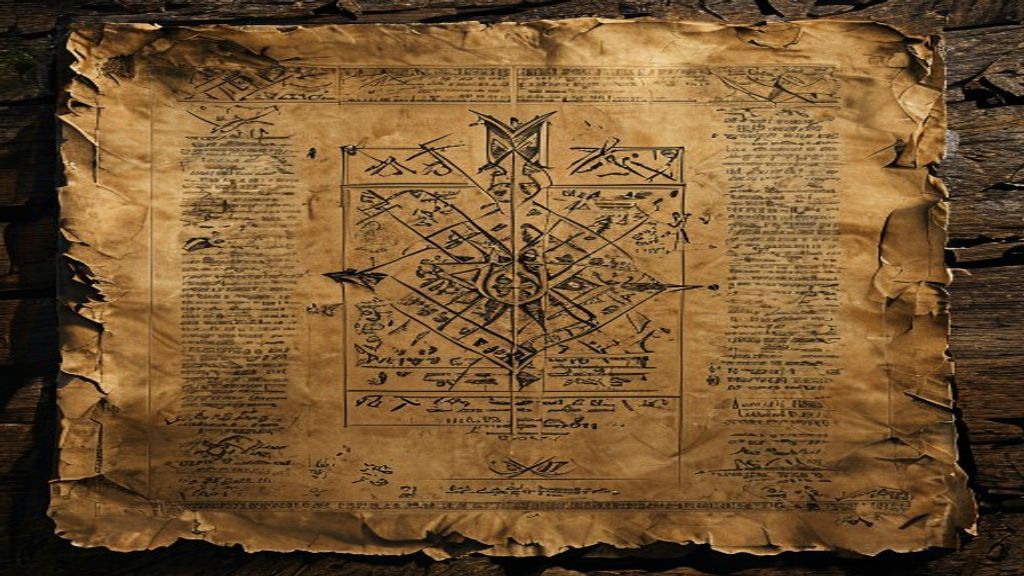
The Icelandic magical manuscript tradition offers a rare opportunity to study how the general Elder Futhark runic principles — including the luck and victory functions of Sowilo and Tiwaz — were codified and transmitted across the post-Viking centuries into a specialised formal system. The Huld Manuscript (Icelandic: Hulda, meaning "secrecy" or "concealment"), compiled by Geir Vigfússon around 1860 but drawing on an older tradition reaching back to the 17th-century Galdrabók and beyond, is among the most detailed surviving records of this system. It contains approximately 30 named magical staves, each accompanied by its specific purpose and the words of power or ritual requirements for its activation.
Within the manuscript, the Lukkustafir — luck staves — form a distinct functional category alongside protective staves (verndarstafir), love staves (ástfangarstafir), and sleep staves (draumstafir). The luck staves are typically described with formulas such as: "Whoever carries this stave will not suffer misfortune on land or sea." This phrasing reveals the Norse conception of luck as primarily apotropaic — a shield against bad fortune rather than an attractor of good fortune. The distinction is important: the Lukkustafir does not promise wealth or triumph; it guarantees the absence of catastrophic ill-luck that would prevent normal effort from bearing fruit. This is philosophically consistent with the Elder Futhark approach — Sowilo does not deliver solar power as a gift; it channels the sun's force through a prepared vessel, supporting the practitioner's own directed effort.
Visually, the Icelandic luck staves developed well beyond the linear Elder Futhark bind rune format into radially symmetric, often eight-armed designs that resemble complex snowflakes or compass roses. This evolution reflects several centuries of syncretic influence: the Norse runic tradition absorbed elements of medieval European occultism, astrological symbolism, and the complex geometric aesthetics of ecclesiastical art through the Christian period. The result is distinctly Icelandic — recognisably rooted in runes, but transformed into something with no direct Elder Futhark precedent. Scholars such as Árni Björnsson and more recently Kári Pálsson have noted that the Huld Manuscript staves show clear compositional logic: their radial forms often contain, at their centre, a combination of runic elements that perform the same symbolic function as Elder Futhark bind runes, embedded within a more elaborate geometric frame.
The "Gibu Auja" formula — documented on 5th and 6th century Migration Age objects from Scandinavia — represents an earlier, simpler form of the same luck-working tradition. The phrase translates as "I give luck" or "I give protection," and it appears as a bind rune combining Gebo (ᚷ, the gift) and Ansuz (ᚨ, divine speech and transmission) into a compact ligature on portable amulets. This is arguably the direct Elder Futhark ancestor of the Icelandic luck stave: the same functional intent (bestowing luck on the bearer), compressed into a runic ligature, activated through the gift-giving relationship between the maker, the divine forces, and the recipient. The evolution from the sparse Gibu Auja bind rune of 500 CE to the elaborate Lukkustafir of the Huld Manuscript covers thirteen centuries, but the essential logic — bind the luck-principle into a visible form, dedicate it to a specific person, activate it through ritual declaration — remained constant.
Final Words: Begin Your Bind Rune Journey
Twenty articles. Twenty doors opened into one of the oldest symbolic traditions in the Germanic world. We have traced bind runes from the Kylver Stone of 400 CE to the Icelandic grimoires of the 17th century, from the warrior's sword hilt to the scholar's manuscript table. We have examined individual runes — Algiz and Thurisaz for protection, Laguz and Berkano for healing, Fehu and Jera for prosperity, Ansuz and Raido for journeys of mind and body — and we have watched them combine into structures of extraordinary intentional precision. And now, in this final article, we arrive at victory and luck — the two qualities that the Norse tradition understood as the culmination of a life lived in alignment with its own deepest purpose.
What remains is the rune you have not yet carved. The bind rune for your name, your year, your particular challenge and your specific hope. No article can compose it for you. But the canvas exists — interactive, free, and built on the same scholarly foundations that ground every article in this series. Select your runes. Place them on the shared stave. Watch as Tiwaz and Sowilo — or whatever combination speaks to your particular working — merge into a single sigil that is, for the first time, entirely yours. Then name it aloud. Commit to it. Carry it.
The tradition does not end with reading. It begins with making.
Create Your Victory Bind Rune Now →Frequently Asked Questions
What is the best bind rune for good luck?
The Tiwaz-Sowilo bind rune is among the most historically grounded combinations for victory and fortune. Sowilo (ᛋ) channels solar force and clarity of purpose, while Tiwaz (ᛏ) provides disciplined direction and the will to act justly under pressure. Together they form a stave associated with triumph earned through both effort and alignment with higher principles — the Norse conception of luck as something cultivated rather than passively received. Adding Wunjo (ᚹ) to this pairing can extend the working toward lasting joy in the outcome.
What did Norse Vikings use as runes for luck and victory?
The Old Norse poem Sigrdrífumál explicitly describes victory runes — sigrúnar — inscribed on sword hilts, blade edges, and grip components before battle. Sowilo was central to this practice, as its solar force was understood to guarantee the clarity and momentum that leads to triumph. The historical record also includes amulets bearing the formula "alu" (a Proto-Norse word for protective power) and "gibu auja" (I give luck), both found on Migration Age artifacts from 5th–6th century Scandinavia, demonstrating that luck-working was a formalised amulet tradition long before the Icelandic manuscript period.
What is the Sigrdrífumál and why does it matter for rune magic?
The Sigrdrífumál is an Old Norse eddic poem preserved in the Codex Regius (c. 1270 CE), in which the valkyrie Sigrdrífa teaches the hero Sigurd a comprehensive system of runic magic. She categorises runes by function: victory runes (sigrúnar), ale runes (ölrúnar), birth runes (bjargrúnar), wave runes (brimrúnar), and several other specialised categories. This is the primary textual source for the targeted use of individual runes in focused workings, and it confirms that the Norse tradition clearly distinguished different runic purposes — with victory and protection forming a central paired domain that specifically included Tiwaz ("name Tyr twice") and Sowilo.
What is the Lukkustafir and how does it differ from an Elder Futhark bind rune?
Lukkustafir (luck staves) are Icelandic magical staves recorded in post-medieval grimoires such as the Huld Manuscript (compiled c. 1860, drawing on a tradition reaching back to the 17th-century Galdrabók). They differ from Elder Futhark bind runes in visual structure — Lukkustafir use radially symmetric or cross-based designs incorporating runic elements within complex geometric frameworks — and in historical context, reflecting the Icelandic magical tradition's synthesis of Norse runic lore with later continental esoteric influences. Elder Futhark bind runes are older, geometrically simpler, and draw exclusively on the pre-Christian Germanic symbolic system.
Is Wunjo a luck rune?
Wunjo (ᚹ) translates from Proto-Germanic as "joy" or "bliss" — the satisfaction arising from belonging, communal harmony, and outcomes aligned with one's deepest hopes. In this sense it is associated with good fortune, but specifically with the experiential dimension of luck: the felt quality of a life going well. It differs from Fehu (wealth in motion), Jera (harvest of patient effort), and the victory-oriented Sowilo-Tiwaz pair in that it represents the emotional and social flowering of success rather than the directed force that creates it. It is an excellent third rune to add to a victory bind rune when the goal includes not just winning, but finding meaning and joy in the winning.
How do I personalise a victory bind rune with my own name?
Name-binding incorporates the initial runes of your personal name into the victory stave, creating a sigil that anchors the working specifically to you. Identify which Elder Futhark runes correspond to the initial sounds of your name — working phonetically, not alphabetically — then integrate those runes geometrically with Tiwaz and Sowilo on a shared central stave. Every line in the final design should serve the combined working: no extraneous strokes, no unintended hidden runes that contradict your intent. The Bindrune Creator canvas at bindrune-creator.com/canvas allows you to compose, arrange, and export this design before committing it to a physical medium.
Can bind runes for success be used without a spiritual framework?
Yes. Many practitioners approach bind runes as a structured method for crystallising goals, clarifying values, and creating a visible anchor for sustained focus. The psychological literature on implementation intentions and symbolic self-completion (Wicklund and Gollwitzer, 1982) supports the view that ritualised symbolic commitment to a goal representation increases the likelihood of sustained effort under adversity. The bind rune functions as a precision tool for intentional living regardless of metaphysical framework: design it deliberately, name it clearly, carry it consistently, and let the symbol do its cognitive work as an anchor for the state and the purpose you have chosen.